A Family Table at Monaleo’s Place
Step inside Monaleo’s two-story home on the outskirts of Houston and the scene feels like the opening act of a classic Black holiday movie—the calm, intimate stretch before chaos ever has a chance to arrive. Jazz piano hums softly through the living room. Her younger sister sits on the couch, headphones on, drifting somewhere else entirely. Her father chats easily with her stepmother. Nearby, her 94-year-old great-grandmother watches it all from a wheelchair, alert and observant. In the kitchen, a cousin shakes lemon-drop cocktails while Monaleo’s manager waits patiently by the granite island. One grandmother tends to cornbread, its buttery aroma filling the house, while the other—fresh off yet another cruise—cradles Monaleo’s two-year-old son and recounts stories about tracing her husband’s ancestry back to enslaved people in the Carolinas, as well as spending a week with Ruby Dee and Ossie Davis decades ago.
“Drink,” she says firmly, like this should already be understood.
She’s sharp, funny, and blunt, and it’s immediately clear where Monaleo’s razor-edged humor and fearless punchlines come from. That wit has been inherited, sharpened, and passed down.
“I was raised by women who talk slick and don’t mince words,” Monaleo says. “It’s natural. It’s smart. My mom and my grandmothers can destroy you with language alone—they don’t need to touch you.”
That same Houston-bred directness defines her music. Monaleo thrives on stripping down weak men, online trolls, and loud doubters inside tightly built rap songs that feel like they should dominate radio if radio were braver. Tracks like “We On Dat” land with the kind of raw aggression once designed to shut clubs down—equal parts threat and celebration. On remixes like her standout verse on “PTP,” she zeroes in on broke dudes with fake watches who embarrass themselves chasing her attention, bars so specific they feel aimed at someone real.
She’s been operating in this space since her breakout in early 2021, when “Beating Down Yo Block” fused Texas swagger with chaotic party energy and Midwest street intensity. From the jump, her strength has been balancing toughness with vulnerability. She talks her shit, then lets the cracks show. Lines like “I can’t break no bread if you wasn’t sleeping on that couch with me” hit harder because they’re lived-in, not decorative.
Her grandmother laughs remembering it. “That line killed me,” she says. “Because I was sleeping on that couch with her.”
Now 24, Monaleo first turned to rap as a way to survive. Depression, childhood abuse, grief, and an early suicide attempt shaped her long before fame arrived. She’s never hidden that history, sharing pieces through her music and an unusually open social media presence. For her, rap wasn’t a career move—it was release.
“What I loved about Texas rap growing up was how fearless it was,” she explains, naming influences that stretch from UGK to Megan Thee Stallion to Z-Ro. “They didn’t care about approval. It was raw. Even if I didn’t agree with everything they said, it was real.”
That honesty comes at a cost—especially for women in rap. Female artists are dissected in ways their male counterparts rarely face. They’re expected to be polished but relatable, political but palatable, sexy but respectable, outspoken but not too outspoken. Monaleo knows the trap well.
“There’s something about being a Black woman where people feel entitled to judge every move,” she says. “They want accountability for things nobody else gets questioned for. It’s exhausting.”
Her response on her latest mixtape, Who Did the Body, is refusal. She doesn’t soften; she doubles down. The project is her most complete work yet, moving fluidly between Houston bravado, church-bred theatricality, and storytelling rooted in survival. Songs like “Putting Ya Dine” lean into slurred Southern swagger. “Bigger Than Big” taps gospel drama. “Spare Change” delivers narrative weight. Throughout, her bars stay sharp, unfiltered, and darkly funny—echoing the spirit of Houston legends who never cared about comfort.
The boldest moment comes on “Sexy Soulaan,” a pro-Black anthem rooted in Southern lineage and ancestral memory. She uses the term “Soulaan” to honor Black Americans whose roots in the U.S. stretch back generations, weaving cultural pride, superstition, and resistance into the hook. The song draws a firm line—and backlash followed. Some critics took issue with her visuals referencing broader Black diasporic flags, arguing over ownership and identity.
Monaleo didn’t flinch.
“I’ve known what I stand for since I was a kid,” she says. “Black unity matters to me. I’m not walking that back.”
The conviction feels genuine, not performative. It recalls older Southern rap moments where pride and politics coexisted without apology.
As evening settles in, Monaleo moves effortlessly into another role: host. She cooks for everyone—gravy simmering, collard greens braised with smoked turkey, macaroni layered with cheese before sliding into the oven. Family drifts in and out, carrying plates, laughing, lingering.
“If I cook, people come,” she says. “That’s family. Doesn’t need a holiday.”
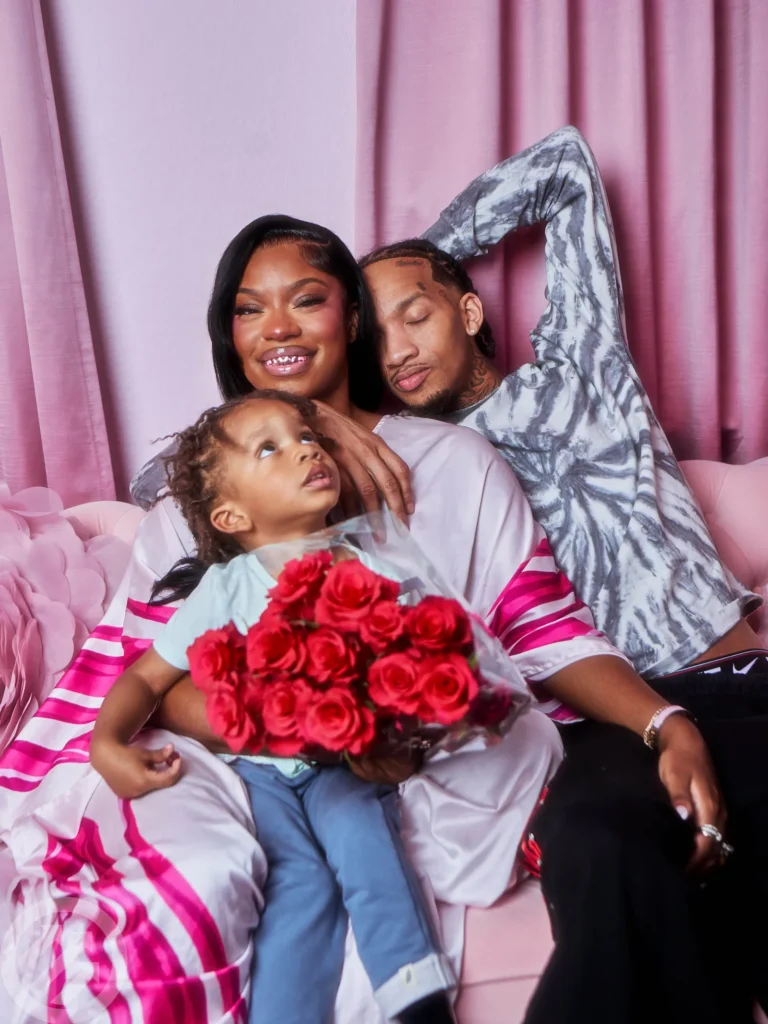
Her husband, rapper Stunna 4 Vegas, moves quietly through the house, handling chores, protective and reserved. They married recently in a ceremony held quickly out of concern for Monaleo’s father’s health—he made it down the aisle. Wedding photos line the walls. Their life together feels grounded, private, real.
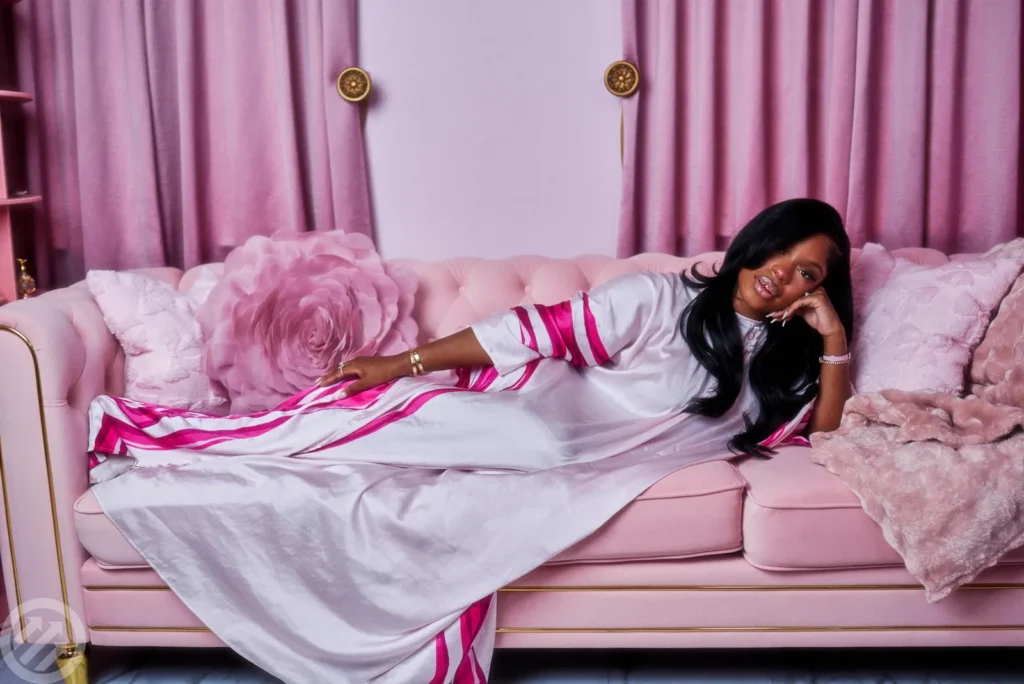
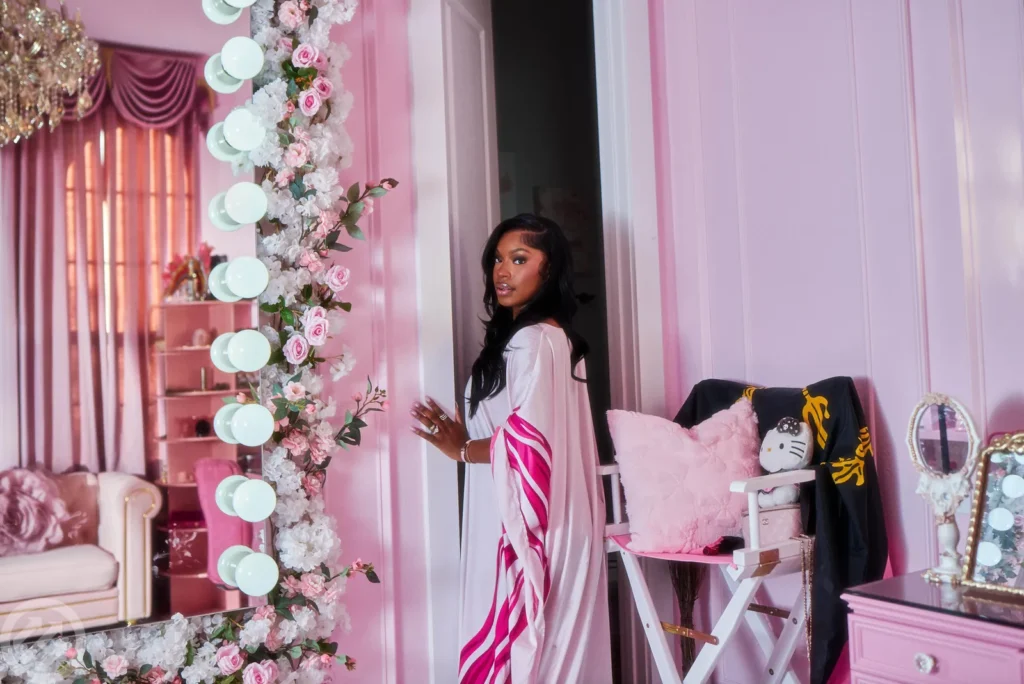
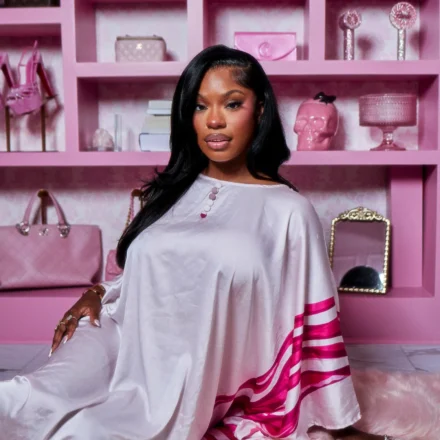
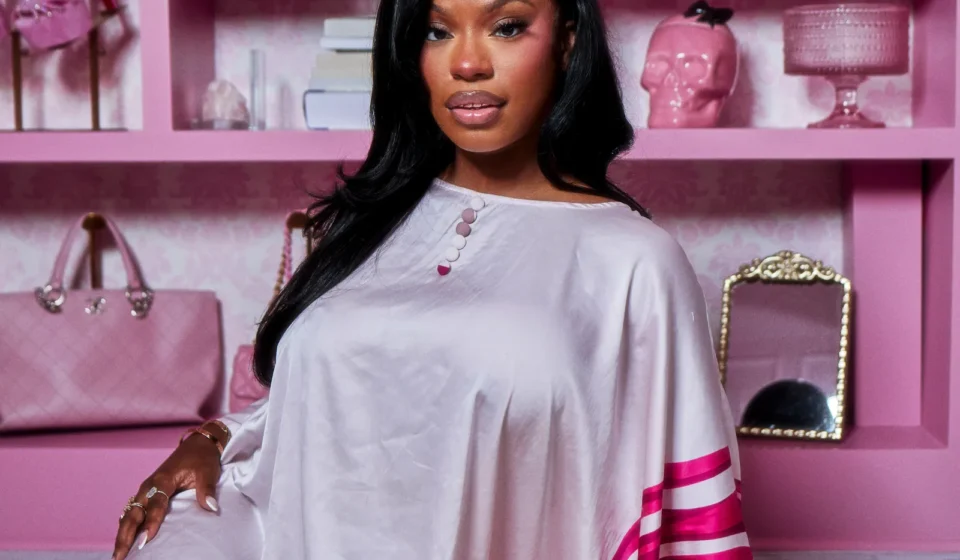
Later, after most guests leave with to-go containers, Monaleo shows a small pink room she calls her sanctuary. Shelves hold herbs, spirits, memorial photos, and the heels she wore at her wedding. A gold plaque commemorates her breakout record. It’s a space built from memory and intention.
“I couldn’t live anywhere else,” she says. “If I left Houston, this would disappear.”
She pauses, reflecting on how often mortality appears in her lyrics.
“I know some people just want party songs,” she admits. “But I’m building something bigger than hits. The bops pay the bills—but I want freedom.”
Then she smiles, unapologetic.
“I’m from Houston,” she says. “Eventually, I’m gonna rub you the wrong way. That’s just how it goes.”