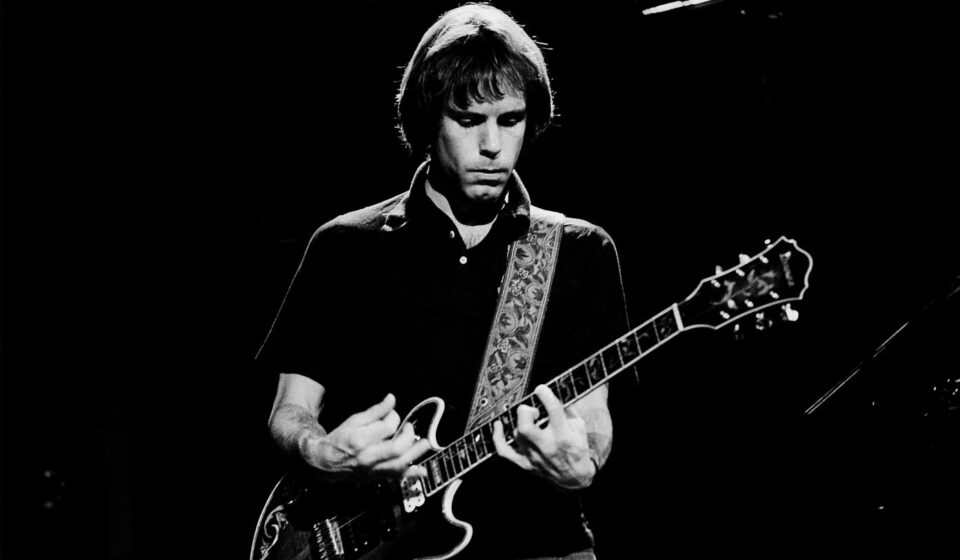
Bob Weir, 1947–2026: the tireless rocker who carried the Grateful Dead forward
As one of his band’s defining songs, “Truckin’”, famously puts it, Bob Weir’s life truly was a long, strange trip. Weir, who died on Saturday, January 10, at the age of 78, was a co-founder, guitarist and principal vocalist of the Grateful Dead, and one of the central figures behind both the psychedelic rock explosion and the wider American counterculture of the 1960s. His career was marked by remarkable triumphs — including helping to turn the Dead into one of the most successful touring acts in U.S. history — as well as serious personal and professional challenges. After the death of Jerry Garcia in 1995, Weir emerged as the key force behind preserving and extending the band’s enormous legacy, a responsibility he fulfilled with notable success, from massive reunion concerts to ambitious orchestral reimaginings of the group’s music.
Weir faced considerable difficulties from an early age. He was born in San Francisco in 1947 to parents who were college students at the time and later placed him for adoption. Struggling with undiagnosed dyslexia, he was expelled from nearly every school he attended. At one point, he was enrolled in a Colorado school designed for boys with behavioral problems. During his teenage years, he found relief and purpose through sports and music. Influenced by the jazz records owned by his nanny, he experimented with piano and trumpet before committing to the guitar at the age of 13. Guided by Jerry Kaukonen of Jefferson Airplane, Weir developed a strong interest in bluegrass, a path that would ultimately steer him toward a future in rock music.
On New Year’s Eve in 1963, while roaming the streets of Palo Alto in search of a club that would admit him despite being only 16, Weir heard banjo music coming from Dana Morgan’s Music Store. Inside, he met Jerry Garcia, and the two played music together throughout the night. By morning, they had decided to form a band called Mother McCree’s Uptown Jug Champions. Initially a jug band, the group soon began moving toward rock’n’roll, inspired by the explosive success of The Beatles. By 1965, they had renamed themselves The Warlocks and soon after adopted the name Grateful Dead, just as the San Francisco counterculture was searching for homegrown leaders. Their first performance under the new name took place in December 1965 at one of Ken Kesey’s notorious Acid Tests in San Jose. The band quickly became closely associated with these events and also appeared at the famed Trips festival in 1966. Around this time, Owsley Stanley, who provided LSD for many of these gatherings, became their financial supporter.
It was within this environment that Weir and the early lineup — bassist Phil Lesh, drummer Bill Kreutzmann, and keyboardist and harmonica player Ron “Pigpen” McKernan — developed the improvisational approach that would define their career and establish them as pioneers of the jam band tradition. Their musical connection was almost instinctive, and Weir’s unconventional rhythm guitar style played a crucial role in shaping the band’s sound. His approach was often described as unusual, playful, and offbeat, yet it proved essential to the group’s collective chemistry.
Throughout the late 1960s and early 1970s, the Grateful Dead cultivated a fiercely loyal following known as “Deadheads,” largely through their extended, immersive live performances. Concerts frequently lasted four hours or more, with individual songs stretching to 45 minutes. The band famously allowed fans to record and trade live shows freely, fostering a dedicated community of collectors. As a result, although they achieved only a single major hit during their three-decade run — 1987’s “Touch of Grey” — their catalog of 22 albums consistently performed well, with landmark releases such as Workingman’s Dead and the double-platinum American Beauty becoming enduring classics. Their records regularly placed within the U.S. Top 30, and their concerts turned into massive celebrations of a distinctly American musical culture, filling stadiums with devoted fans. A 1977 show at Raceway Park in New Jersey, attended by 107,000 people, stood as the largest ticketed concert in U.S. history until 2024.
Weir was an adaptable and imaginative musician who embraced the band’s evolution toward Americana and country-rock influences. Alongside his work with the Dead, he released two solo albums — Ace in 1972 and the more mainstream rock-oriented Heaven Help The Fool in 1978 — and spent time performing with the offshoot group Bobby and the Midnites during the 1980s. Despite side projects, there was little sense of internal fracture within the Dead, whose cult popularity remained strong throughout the 1980s and 1990s. Their most successful album on the charts, In the Dark, arrived in 1987.
The band’s history was repeatedly marked by tragedy, particularly the loss of keyboard players to substance abuse, but it was only after Garcia’s death in 1995 that the Grateful Dead officially disbanded. As the voice behind many of their most cherished songs — including the semi-autobiographical “Truckin’”, “Playing in the Band”, and “Sugar Magnolia” — Weir became central to preserving their identity in the years that followed. He continued performing the band’s music with his own projects, such as RatDog and Furthur, and frequently reunited with former bandmates under various names, including The Dead and the Other Ones, ensuring that the spirit and music of the Grateful Dead remained very much alive.