Cindy Lee Live: A Spellbinding Comeback on Their Own Terms
Cindy Lee has never moved according to anyone else’s clock. Patrick Flegel has long made it clear that autonomy matters more than structure, control more than coordination. No tidy release campaigns, no choreographed press cycles, no predictable touring plans. Even shows that are announced aren’t guaranteed to happen. After releasing Diamond Jubilee in 2024—an album that quietly but decisively reshaped the indie landscape—Lee declared what was billed as a final U.S. tour that spring. Midway through, the remaining dates vanished without warning, attributed simply to “personal reasons.”
Nearly a year and a half later, Cindy Lee finally appeared in the exact spot where they were meant to be all along.
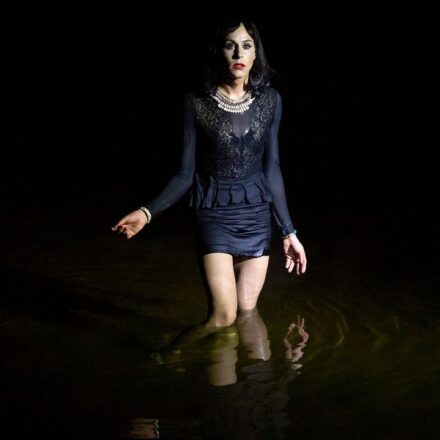
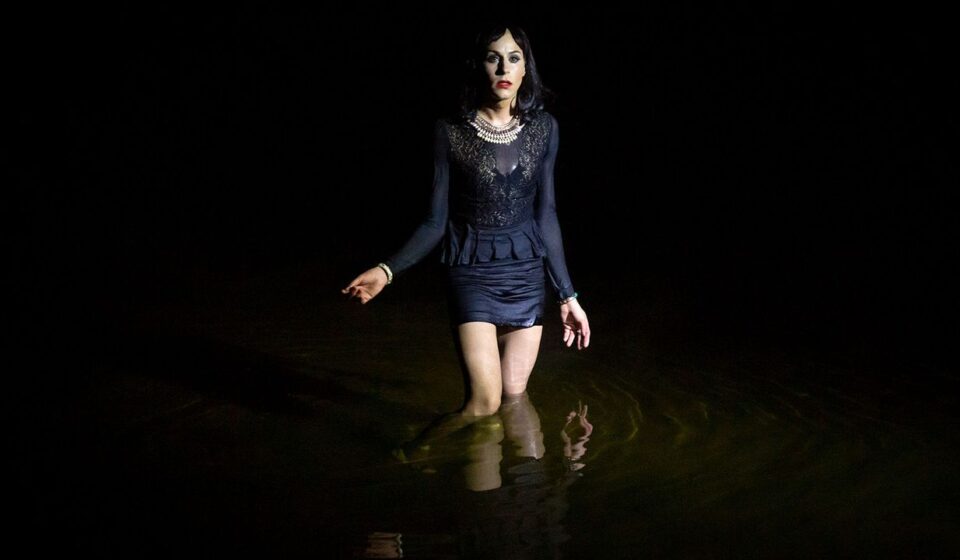
On a cold Chicago night, Lee stood onstage at the Empty Bottle, adjusting cables and tuning an amp as warmth slowly overtook the chill outside. Their cheeks flushed pink under the lights. Although weekday headliners at the venue often wait until well past midnight, Lee arrived early—ten minutes ahead of schedule—drifting into place as if time itself were flexible. Dressed in their familiar look—a gold sequined dress, black beehive wig, knee-high white go-go boots—they placed a bouquet of red roses wrapped in black paper onstage. With a cropped white faux-fur jacket slung over their shoulders, Lee looked like they’d stepped out of a forgotten backstage corridor from another era, pausing only briefly before slipping into performance.
The room was packed, but the crowd held itself in quiet reverence. Phones stayed low, cameras discreet. A few people stared openly, caught somewhere between admiration and awe. One attendee appeared dressed head-to-toe as Cindy Lee—possibly leftover from Halloween, possibly devotion taken literally. Mostly, though, people stood still, watching closely, as if trying to understand how one person could be responsible for last year’s most affecting record.
The atmosphere buzzed with restrained excitement—fans doing their best to stay composed. Adding to the sense of occasion was the venue’s anniversary celebration, marked by an extra merch table and a sense that this night mattered beyond the show itself. Two opening acts gently guided the room into Lee’s orbit. First came a sprawling Chicago collective whose intuitive, freeform performance blended indie rock textures into long, winding jams—melodies stretching, dissolving, and reforming. Then a Canadian duo followed, pulling the audience deeper with hypnotic blends of house, psych-rock, dub, and trip-hop, accompanied by looping projections of color-saturated eyes and symbolic imagery. By the time Cindy Lee returned, the room was dense, quiet, ready.
As Lee stepped back onstage, the house music faded into irrelevance. Three barstools were rearranged with care: one for the roses, one for a DI box, one for a guitar. When the lights caught Lee’s wig at the right angle, it shimmered blue-black like raven feathers. Plugged into a single Fender amp, Lee drifted through songs—“Lucifer Stand,” “Dreams of You,” “Wild One”—rolling seamlessly from one into the next. Backing tracks filled the room, sometimes screeching with feedback, sometimes dissolving into warm, grainy lo-fi textures.
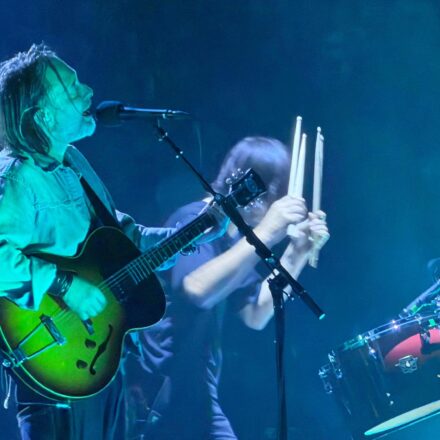
Lee handled their red Gibson SG in every way except conventionally: hoisted like a chalice, laid flat and played horizontally, wedged under an arm like a weapon, or extended outward toward the crowd like a teacher demonstrating chords. The freedom of movement—unrestricted, unstrapped—gave the music a fluid, improvisational edge.
Certain gestures repeated throughout the set, creating a sense of isolation and ritual. Lee tugged at the hem of their dress, chewed gum thoughtfully, snapped fingers with playful precision, then expanded into wider, flirtier movements. During “Lamb of God,” they removed the microphone from its stand and paced slowly, twisting the cable like a lasso, teasing tension into the room.
When the set leaned deeper into Diamond Jubilee, Lee retreated into the shadows, pressing against the back curtain where the lights barely reached. Emerging again, they finally addressed the audience with a soft “Thank you.” From there, the performance bloomed. “Dracula” carried a hypnotic groove that stilled the room. “Deepest Blue” held everyone in place with its emotional gravity. “If You Hear Me Crying” loosened bodies just enough that the crowd began to sway instinctively, mirroring Lee’s movements. Friends leaned into one another. A large man near the front closed his eyes and rocked gently. For a stretch of time, the entire room moved as one.
Two unreleased songs appeared early in the set, both steeped in the same hazy nostalgia as Lee’s recent work. For one, Lee knelt and played guitar flat against a stool, rough and unrefined, more force than finesse. The other dissolved into distortion—vocals buried under crackling noise, like overhearing a confession through a wall. “Felt so bad I could die,” Lee sang, voice heavy with sorrow. “Don’t tell me it’s over.” Between the two songs, Lee’s presence shifted subtly, as if revealing different selves through sound alone.
The performance felt like watching a person age, transform, and remember—all in real time. Lee embodied contradiction: fragile pop singer, reluctant guitar hero, retro girl-group idealist, weary elder with a voice coated in ash. Without changing costumes or breaking character, Flegel moved between these identities effortlessly. The music carried the weight.
As the set closed with “I Don’t Want to Fall in Love Again,” Lee and the audience merged. Feedback softened, making space for Lee’s reverb-soaked voice, distant and yearning. “Help me,” they sang. “Show me who I really am.” The room echoed the plea, softly, collectively. For those moments, everyone existed inside Cindy Lee’s emotional universe—one where catharsis never fully resolves, only deepens.
Lee slipped offstage briefly, purse slung over one shoulder. The crowd kept cheering, steady and patient. When Lee returned, they offered a small curtsy and flashed the widest smile of the night. A final song followed—gentle, aching, dedicated to those lost too soon. Leaning close to the microphone, its grille stained red with lipstick, Lee sang with devastating tenderness. On the final line, they lifted the roses and handed them to two people in the front row, flashed a loose peace sign, pulled on the white jacket, and disappeared once more.
The room lingered in the aftermath—quiet, full, changed.