
LUX – Rosalía
2025
Rosalía has never stood still for long. With Los Ángeles and El Mal Querer, she pulled flamenco into global pop consciousness, first reverently, then destructively—splintering tradition to reveal a fearless pop mind stitching the sacred to the street. MOTOMAMI followed as a kinetic, sun-scorched universe fueled by Caribbean rhythms and unapologetic bravado, establishing her as an artist who treats sound like a living system to be bent, stressed, and rebuilt. When that earthly terrain began to feel fully charted, Rosalía turned upward. The result is LUX.
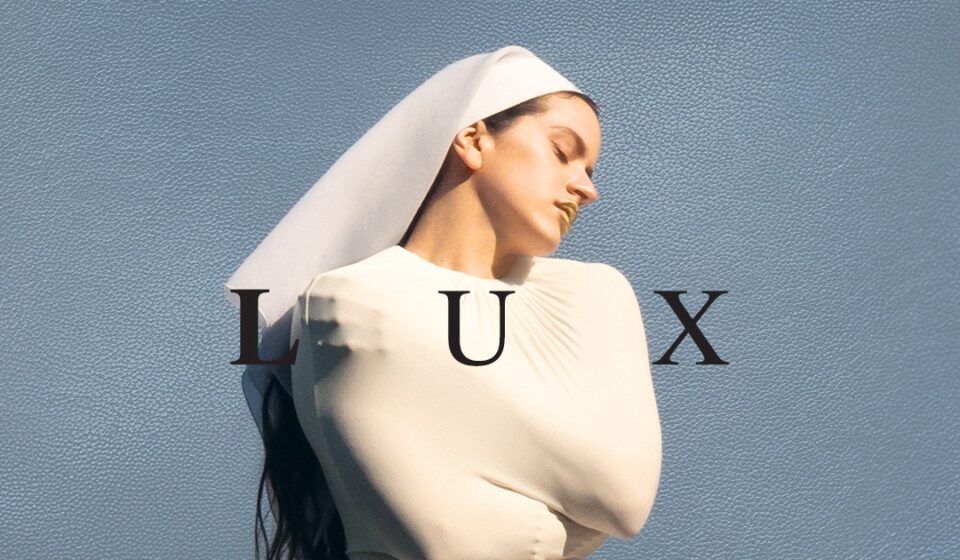
Her fourth album is a bold, emotionally charged work of orchestral pop that barrels through genre boundaries while wrestling openly with love, faith, and identity. Structured in four movements and sung across 13 languages, LUX unfolds like a celestial drama—music that feels less engineered for instant gratification and more designed as a compass for listeners searching for meaning inside pop’s familiar time limits. It doesn’t chase the adrenaline rush of MOTOMAMI; instead, it offers something slower and heavier: immersion, devotion, consequence.
Despite its scale and intellectual reach, LUX never feels like an academic exercise. It’s closer to a modern-day requiem for emotional confusion, a lavish lament built for people who want pop music to risk something. The credits alone suggest grandeur—full orchestras, choral ensembles, returning collaborators, and acclaimed composers—but the album never loses sight of its core instrument: Rosalía’s voice. She is the constant axis around which everything rotates, guiding LUX forward like a spiritual expedition. On the opening track, “Sexo, Violencia, y Llantas,” she lays out her ambition plainly: to leave the world, reach something divine, and come back changed. What follows is a full cycle of ascent, fracture, and return, expressed through flamenco-inflected confessionals, barbed waltzes, swelling operatic passages, and songs that seem to invent their own language as they go.
At its heart, LUX treats desire as a sacred dilemma and divinity as something unstable and deeply human. Romance, masculinity, faith, power, femininity, mortality—they orbit one another constantly, articulated across Japanese, Ukrainian, Chinese, Italian, and many other tongues. Rosalía’s path to this worldview is rooted in study as much as experience. She immersed herself in the lives and writings of women who blurred the lines between devotion and rebellion—figures like Teresa of Ávila, Sun Bu’er, and Hildegard von Bingen—while also engaging feminist theory during her preparation for acting work. Their voices echo through LUX, reshaped into a belief system suited to a 33-year-old pop star confronting love, fame, and creative exhaustion head-on.
In that sense, LUX reads like a contemporary gospel of womanhood under celebrity. On “Sauvignon Blanc,” she pledges to renounce luxury—burning symbols of wealth in exchange for spiritual clarity. On “Reliquia,” she frames fame itself as an offering, surrendering personal ownership of her heart. “Dios es un stalker” flips the script entirely, casting Rosalía as a jealous, obsessive deity whose devotion curdles into control. Delivered over pristine basslines and choral textures, the song feels like a corrupted hymn, a reminder that even imagined gods are shaped by human weakness.
The album is also inseparable from heartbreak. Rosalía’s highly publicized engagement ended in 2023, and LUX traces the aftermath through shifting emotional lenses. On “La Perla,” she dismantles men with surgical precision, firing off insults that land with the force of classic art-pop dismissals. “Mio Cristo” moves in the opposite direction, sanctifying a lover’s suffering before interrogating it: how much pain was ever justified? Elsewhere, “Novia Robot” widens the scope, presenting a satirical commercial for a programmable girlfriend—an acidic critique of how femininity is packaged, sold, and consumed. The message is blunt: desire does not grant ownership.
Forgiveness emerges as one of LUX’s central doctrines. “La Rumba del Perdón” frames it not as moral weakness but as reclamation of agency. Guest voices recount betrayals both intimate and criminal, while Rosalía insists that forgiving is an act of control, even when love loses to power or loyalty collapses. The final movement narrows its focus, growing quieter but more devastating. “Memória” tallies what survives, while “Magnolia” releases what cannot be held: life takes everything, and gratitude follows anyway. The journey promised at the start is completed—Rosalía returns not enlightened or sanctified, but resolved.
Yes, LUX is pop music—but not the algorithm-friendly kind. It belongs in conversation with albums that used grand musical language to translate heartbreak into mythic feminine narratives. The hooks are present; they’re simply embedded in landscapes rather than playlists. “Focu’Ranni” blooms from fragmented vocals into a melody that feels like an evolved echo of her earlier work. “Porcelana” snarls through the psychology of a damaged diva. “De Madrugá” flashes by with the velocity of a final message sent too late. Throughout, LUX expands Rosalía’s artistic scale without sacrificing intimacy.
She’s reset her world before—erase the map, build anew—but this time feels different. LUX isn’t just a reinvention; it’s a fully realized space where pop and belief systems collide, each interrogating the other. When she sings, “When God descends, I ascend / and we meet halfway,” it sounds less like metaphor and more like a thesis. If you arrive expecting easy pleasure, you may feel disoriented. Stay anyway. Let it unfold. You don’t need a personal stake in Rosalía’s career to feel the chill when she asks you, softly, to scatter flowers over her grave.