What Saffron founder Laura Lewis-Paul has learned from a decade in music tech
Without music technology, there would be no modern music industry. Unless they’ve mastered every aspect themselves, most artists rely on engineers, mixers and producers to record their work and shape it into something finished and release-ready. These roles may sit largely out of the spotlight, but they are complex, creative and essential: people working in music tech help construct every track from the ground up, from rhythm and instrumentation to vocal sound and final polish.
That’s why the lack of diversity in this part of the industry is so stark — and so troubling. Fewer than five per cent of people working in music tech are women, non-binary or trans, and fewer than one per cent are women, non-binary or trans people of colour. If recording studios continue to be overwhelmingly white and male-dominated, it raises a fundamental question about how the wider music industry can ever become truly inclusive.
Addressing that gap is the mission behind Saffron, a Bristol-based non-profit founded 10 years ago by Laura Lewis-Paul. She launched the intersectional music tech organisation to improve representation in the sector while also supporting women, non-binary and trans DJs. Over the past decade, Saffron’s growth has mirrored the needs of its community, expanding well beyond its original scope.
“In the early days, it was very much about helping women, non-binary and trans people who wanted to learn how to produce or DJ,” Lewis-Paul explains. “We were focused on beginner-level support. But over the last 10 years, we’ve grown alongside our community, so now we’re also working with people at an intermediate and advanced stage.” One of Saffron’s key priorities today is helping participants “break into the industry and build sustainable, long-term careers”.
The organisation’s work now centres on three core areas: educating the next generation of music tech professionals, creating clear pathways into the industry, and fostering a strong, connected network of women, non-binary and trans creatives. With backing from industry partners, Saffron ensures that at least a quarter of the places on every course they run — covering music production, sound engineering, radio broadcasting and DJ mixing — are offered free of charge, helping to lower financial barriers and widen access.
Many of Saffron’s programmes are designed to fit around everyday life. Some take place one evening a week, while others are fully online, allowing people to balance learning with paid work and caring responsibilities. Most participants discover Saffron through word of mouth, something Lewis-Paul sees as proof of the organisation’s strong sense of community.
Alongside education, Lewis-Paul and her team work to build relationships with record labels and other industry gatekeepers who can help create fairer opportunities. She acknowledges that this has been a long and sometimes uneven journey. “There have definitely been ups and downs,” she says. “During the pandemic, the Black Lives Matter movement created a moment where people were really listening. Since then, though, there have been setbacks, especially with broader trends like diversity and inclusion budgets being reduced.”
Changing entrenched industry practices takes time. “For me, the key is building genuine trust with people inside companies on a personal level,” Lewis-Paul says. “It’s a huge industry, but I do feel like we’re starting to build real momentum.”
Recently, Saffron received a significant boost when a globally recognised artist who grew up in the West Country partnered with the organisation to launch an educational grant programme. The initiative supports women, non-binary and trans people working in what she described as “the backbone of the industry”. During a speech at a major music industry awards ceremony, she highlighted the scale of the issue and its personal impact.
“In the two decades I’ve spent in studios, aside from sessions where I specifically requested it, I’ve only worked with one female engineer,” she said. “I wish that when I was starting out, there had been more women around me — engineers, technicians, managers, executives. More support, more advice, more people to hold others accountable when I felt uncomfortable. Maybe then I wouldn’t have had to deal with so much unnecessary noise.”
For Lewis-Paul, hearing those words was both affirming and energising. “It was like hearing our vision articulated in a completely new way,” she says. “She was able to connect it directly to her own lived experience as an artist — and what made it even more powerful was that the entire industry was in the room. We’ve been doing this work for 10 years, but that moment really captured why we do what we do.”
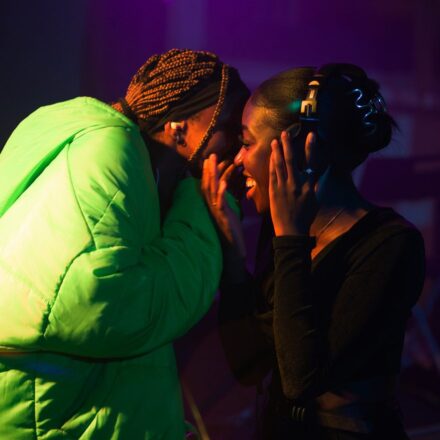
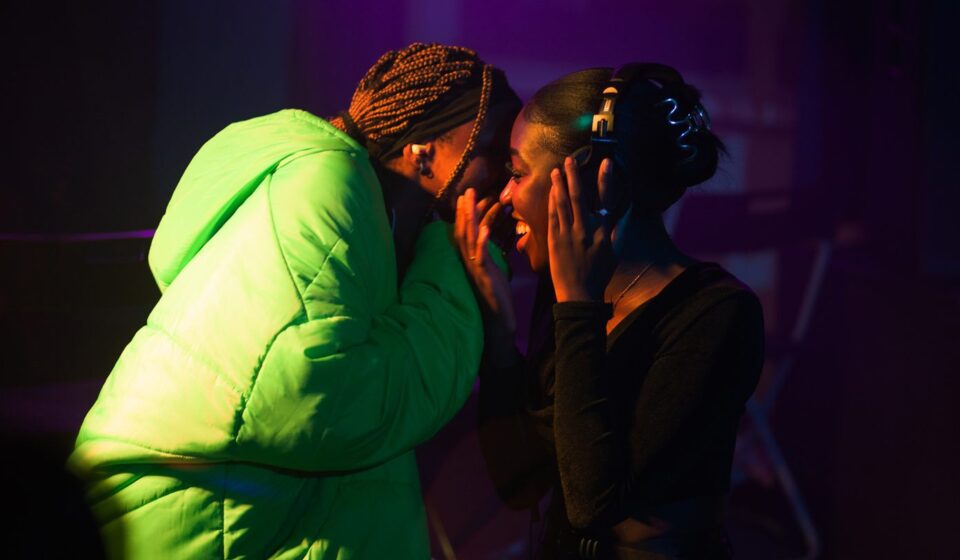
Still, it’s often the quieter, grassroots moments that mean the most to her. “At the end of every DJ course, we host a mix night where people play their first-ever live set,” Lewis-Paul says. “You can see what a genuinely inclusive dance floor looks like. If something goes wrong, no one judges or boos — everyone cheers. That level of support creates a really special energy, and it reminds me why this work matters.”