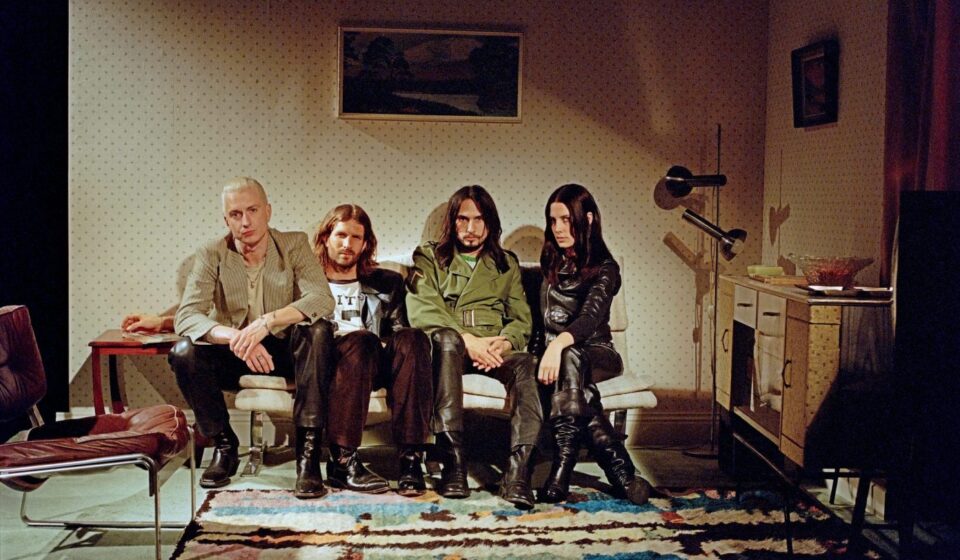
Wolf Alice are always changing: “It’s exciting not to coast on what you’ve already done”
Some artists begin with sky-high targets, but when Wolf Alice first came together in the early 2010s, their ambition was modest and specific: they wanted to play The Old Blue Last — a 150-capacity pub that, at the time, sat right at the heart of east London’s indie ecosystem. More than a decade on, they’ve not only ticked that box multiple times, they’ve climbed far beyond it, steadily moving up the rungs of British music into increasingly larger rooms. Now they’ve reached the arena tier, headlining huge UK venues, including two nights at London’s The O2 this week (December 2–3).
“I still kind of feel like that version of us is in here,” guitarist Joff Oddie says when the band are reminded of that early dream. “Like this is just an extra bonus level.”
When we speak, the group are midway through the European stretch of their tour, clustered around a laptop on a black leather sofa backstage, close enough that you can feel the shared focus. And in the shape of Wolf Alice’s story, this moment makes sense — not because it arrived suddenly, but because it’s the result of them refusing to rush.
Realistically, they probably could have taken the arena leap earlier, riding the momentum of their third album, 2021’s beautifully crafted Blue Weekend. But instead of sprinting toward the biggest stages the second they became available, they moved with patience, letting the scale of their live shows grow only when it felt earned.
“Doing arenas off Blue Weekend probably would’ve been too soon,” bassist Theo Ellis says, while the rest of the band quietly agree. “It feels right now. We’ve grown at the right pace. We’ve done things when we’ve been comfortable doing them. We’ve backed ourselves creatively — and only when we feel like we can actually deliver the show we want to deliver.”
At the moment, they can. Wolf Alice’s current live set is built for arenas — and potentially bigger. When they stepped back onstage earlier this summer after a three-year break from touring, it was immediately obvious something had shifted. They didn’t just return — they came back sharper. Frontwoman Ellie Rowsell felt more electric than ever, and the band played like a unit that had tightened its grip, aiming to make each show as joyful, punishing, cleansing and explosive as possible.
That jump in live intensity likely connects, at least partly, to the mindset behind their fourth album, August’s The Clearing. On that record, the four-piece lean into the steadier self-assurance of their thirties, and they set out to make an album that prioritised performance — not as an afterthought, but as part of the DNA.
“Whether the stage is huge or tiny, I want it to feel like you’re watching a real show — almost like theatre,” Rowsell says, describing what she wanted from this tour. “I wanted the songs to have that sense of performance built into the writing and the recording, rather than us trying to find it later or figuring it out once we’re rehearsing. People keep saying, ‘This is your most chilled-out album,’ and maybe it is. But when we play it live, I’m like, ‘No — it feels completely different.’”