Falling in Love With Hunxho’s Loveeeeeee Song
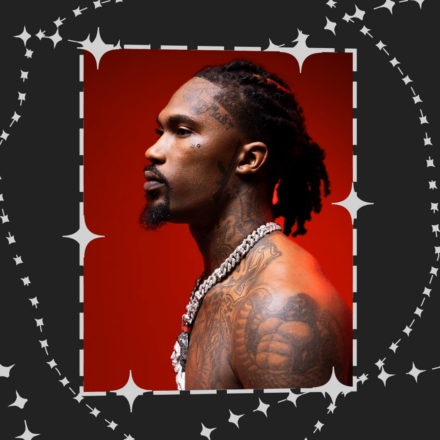
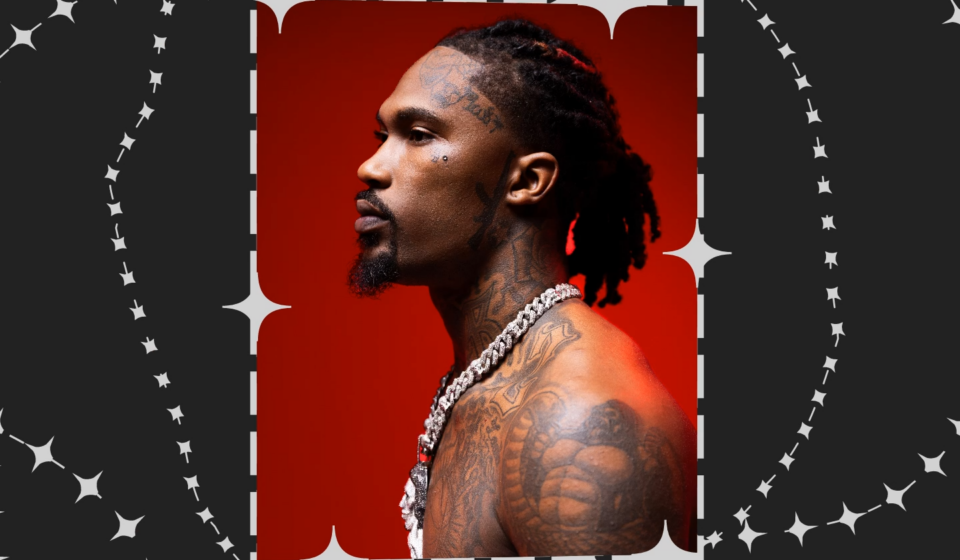
One of the most memorable details about Hunxho is the story of his facial tattoo: a shattered heart that he later had reworked into a healed one. It’s a small transformation, but it neatly captures the emotional posture he’s become known for—an artist emerging from pain rather than simply dwelling in it. Within the broader “pain rap” lineage shaped by figures like Boosie, Kevin Gates, and Lil Durk, Hunxho stands slightly apart, leaning more deliberately into romance and vulnerability, with a softer, more reflective edge that sets him closer to melodic confession than hardened street lament. His delivery, often flattened by Auto-Tune and restraint, feels like emotional exhaustion filtered through melody—something like Future after deciding to try emotional accountability instead of avoidance.
What defines Hunxho’s appeal is how earnestly he writes about love. His songs often resemble open-hearted affirmations disguised as R&B records, built around devotion, reassurance, and material gestures of care. There’s a near-idealized consistency in how he frames relationships: as spaces of protection, affirmation, and spiritual grounding. On tracks like “If Only,” he praises beauty in a way that feels almost devotional, positioning love as something both tender and elevating rather than chaotic or destructive. His writing leans heavily into reassurance—lines that read like encouragement more than seduction, as if he is constantly trying to stabilize emotion rather than intensify it.
Yet the sincerity of it all produces a strange double effect. The music is so unwaveringly earnest, so committed to emotional clarity, that it sometimes tips into unintended humor. Dreary piano loops and slow-burning, Hallmark-style declarations of love create a tonal seriousness that can feel exaggerated in its purity. Songs built around simple declarations or overly literal romantic framing often resemble text messages stretched into full compositions, capturing how modern relationships are increasingly mediated through language that is both intimate and performative. In that sense, Hunxho’s music mirrors how people actually communicate affection online—direct, unfiltered, and occasionally awkward in its transparency.
This sensibility has found a cultural echo in what social media has dubbed “Chicken Alfredo music,” a tongue-in-cheek label for moody, melodramatic R&B and melodic rap often embraced by younger listeners. Within that context, Hunxho’s breakout moments—especially tracks like “Birthday Girl” from For Her 2—have taken on a life of their own. Built around lavish gestures, romantic repetition, and fragmented phrasing, the song became an unlikely viral object, less because of lyrical precision and more because of how its cadence and structure lent themselves to reinterpretation, parody, and repetition. What began as a straightforward love anthem gradually transformed into a meme-like linguistic fragment, absorbed into internet vocabulary as much as it was consumed as music.
That evolution highlights a key tension in Hunxho’s work: the gap between intent and reception. His lyrics are rarely cryptic or layered, but their simplicity becomes a kind of open field where listeners project humor, sincerity, or irony depending on context. Over time, repeated exposure turns even the most straightforward lines into cultural material—phrases that circulate beyond their original emotional framing. In performance clips and online clips alike, this ambiguity becomes even more visible, as audience reaction often overwhelms the songs themselves, reshaping their meaning in real time.
Still, beneath the memes and tonal contradictions, there is a consistency to Hunxho’s artistic identity. His music rarely indulges in chaos or volatility; instead, it favors emotional accountability, directness, and an almost therapeutic framing of conflict. Even breakup songs tend to unfold like structured conversations rather than eruptions of anger, with an emphasis on communication, reflection, and resolution. In a contemporary landscape where many artists oscillate between toxicity and detachment, his steadiness stands out precisely because it feels unperformed.
Ultimately, what makes Hunxho compelling is not lyrical complexity but emotional transparency. His songs function less as puzzles and more as statements—sometimes clumsy, sometimes overly literal, but consistently grounded in feeling. Whether taken seriously or folded into internet humor, they persist because they occupy a space where sincerity itself becomes content. And in that space, even the simplest declaration of love can echo longer than expected.